
BFR for Athletes: A Smarter Way to Recover & Maintain Muscle
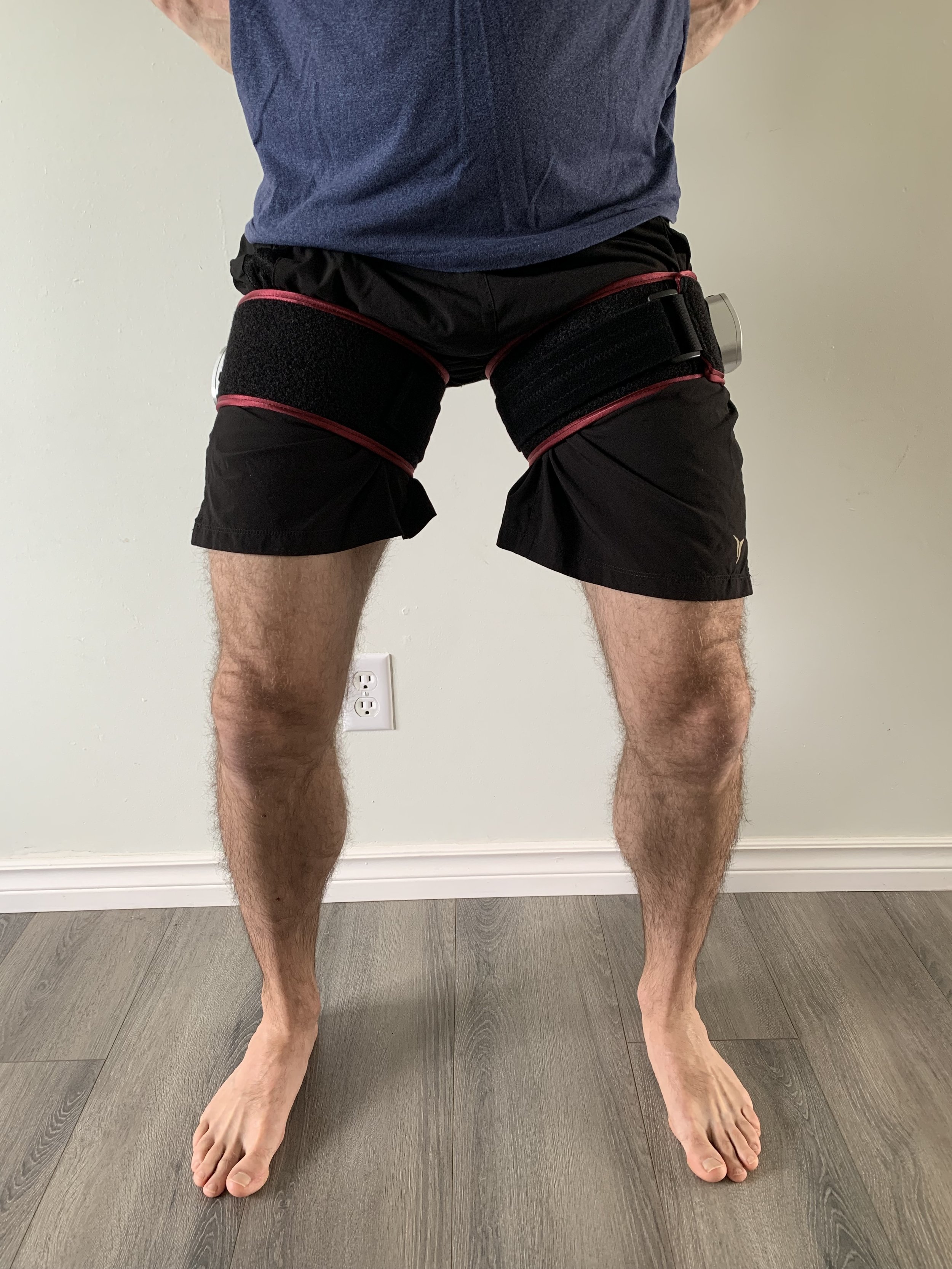
For athletes, recovery doesn't always mean doing nothing. Whether you're a runner building mileage, a cyclist stacking training days, a soccer player in the middle of a busy season, or a dragon boat paddler preparing for competition, there are times when your body needs a break from heavy loading - but your muscles can still benefit from being challenged.
This is where Blood Flow Restriction (BFR) training can be a useful tool.
What is BFR?
BFR utilizes a specialized cuff, similar to a blood pressure cuff, placed around a limb to partially restrict blood flow while you exercise. This results in your muscles having to work harder than you might expect from the amount of weight being used.
An abundance of research has shown that BFR can help support strength, muscle size, muscular endurance, and aerobic adaptations - even when traditional high-load training isn't practical.
Why Use BFR During a Training Block?
One of the biggest advantages for athletes is that BFR can provide muscle activation or engagement without adding a large amount of mechanical stress to the body.
Imagine you're a runner who completed a hard interval session yesterday. Your legs aren't ready for another heavy workout but you still want to stimulate your quads and calves to improve your fitness.
Or you’re a soccer player with several practices and games in the same week and don't want another demanding gym session.
Or you’re a cyclist looking for a low-impact way to challenge your legs between rides.
In these situations, low-intensity BFR exercise can provide an additional training stimulus while keeping your overall physical load relatively low.
BFR may also be useful during tapering, deload weeks, travel, periods of reduced training, or return-to-sport programs, when maintaining muscle activation is important but heavy training isn't ideal.
BFR as Active Recovery
BFR can even be incorporated into light active-recovery activities such as walking, cycling, or low-load strengthening.
Research specifically examining BFR as a post-exercise recovery strategy is still relatively limited, so it shouldn't be viewed as a guaranteed recovery shortcut. However, its ability to create a meaningful muscular stimulus with low external loads makes it particularly interesting for athletes managing high training volumes.
For athletes, sometimes the smartest training session is the one that gives your muscles a stimulus without asking your whole body to take another beating. BFR may be one way to accomplish exactly that.
Reach out if you’re interested in adding BFR to your training or recovery program!
- Thanks for reading and keep looking for more posts in the future on other ‘hot topics’ in the world of Physiotherapy and Physical Rehabilitation!